Isaac Gutierrez | Issac.j.Gutierrez@vanderbilt.edu
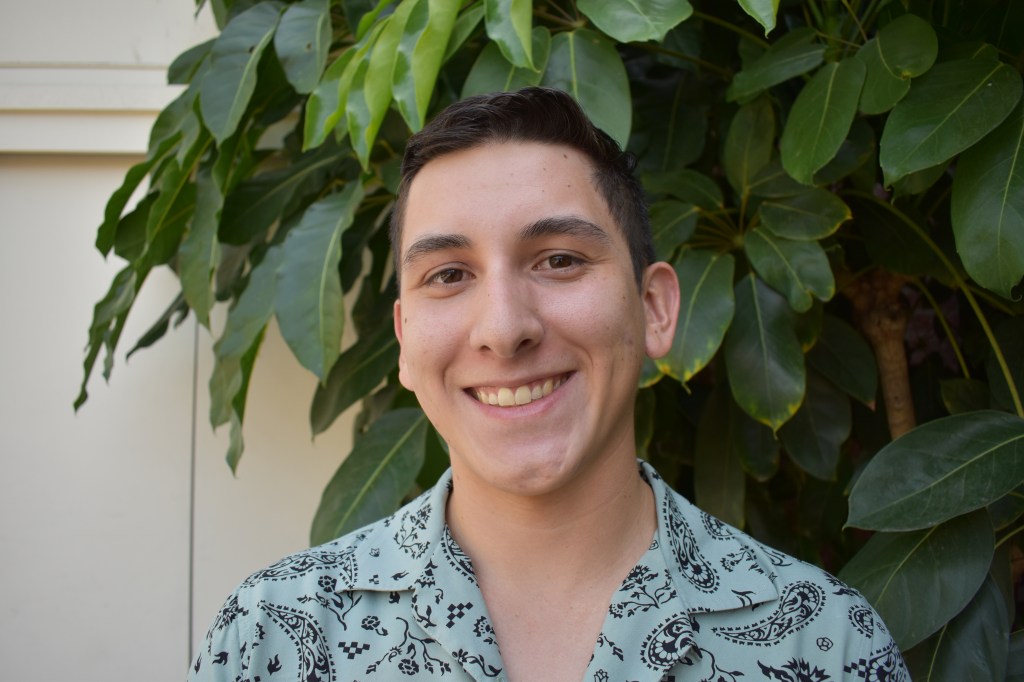
Isaac completed his BS in Biology and Anthropology at the University of Massachusetts Amherst in 2019. During his undergraduate career he participated in paleontological and bioarchaeological excavations in Madagascar, New Mexico, U.S.A., and Peru, respectively. These experiences have motivated Isaac to utilize bioarchaeological methods to research violence in its many forms; how acts of violence transform and come to be normalized under certain conditions. His graduate research investigates the formation and maintenance of social identities for communities living in central Mexico during Spanish colonization. Isaac’s research works towards a holistic approach, integrating information from osteological analysis with investigations of archival records and ethnographic accounts from local communities. With this approach, Isaac’s research strives to reframe critical colonial encounters as formative processes in constant negotiation of group and individual social identity, with tangible impacts on modern populations.
Sylvia Cheever | sylvia.a.cheever@vanderbilt.edu | she/her/hers
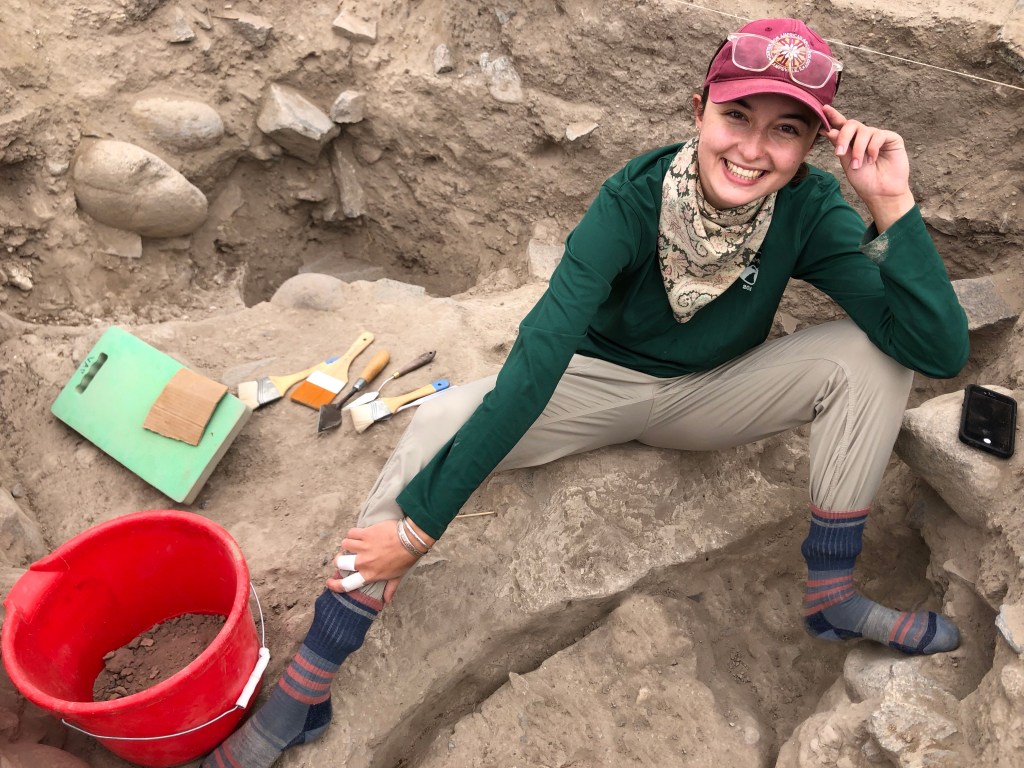
Sylvia is an awardee of the National Science Foundation Graduate Research Fellowship (NSF-GRFP), and she earned her BA from the University of Chicago in 2018. Sylvia’s graduate research focuses on health disparity in relation to resource extraction. She specifically studies the way that toxic burden is distributed in pre- and peri- Colonial communities living in proximity to and working in cinnabar (mercury) mines in the central highlands of the Peruvian Andes. She is interested in approaching toxins holistically, studying not just their presence in bodies but interrogating the ways that toxic affect was experienced in the past.
༻༺
Maya B. Krause | maya.b.krause@vanderbilt.edu | she/her/hers
Maya earned her PhD and MA in Anthropology from Vanderbilt University and holds a BA in Anthropology from Wake Forest University. At Vanderbilt, her research has been supported by the National Geographic Society, Fulbright IIE, and the Tarkington Family. She was also recognized as an Outstanding Instructor of Record for her class Health and Disease in Ancient Populations. Maya completed her dissertation writing at Harvard University’s Dunbarton Oaks Research Library with a Junior Fellowship in Pre-Columbian Studies. Currently, Maya is a Postdoctoral Research Associate at the Joukowsky Institute for Archaeology and the Ancient World at Brown University. Her research investigates the biocultural construction of childhood in the Andes, with particular attention to how caregiving, diet, and migration shaped children’s identities and embodied experiences under imperial rule. Through bioarchaeological methods, Krause explores how early life experiences left physical traces on children’s bodies, revealing the role of children as both agents and subjects in processes of identity formation. Her work contributes to broader conversations about health, imperialism, and the ethical study of human remains, and she is committed to interdisciplinary collaboration and public engagement.
༻༺
Kristina Lee | leekristinae@gmail.com
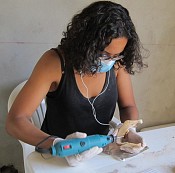
Kristina entered the graduate program at Vanderbilt in the fall of 2016. After she completed her M.A. in Spring 2018, she joined the faculty at a charter school in the Metro Nashville Public School system for one year. After her bioarchaeological work on the corporal process of identity construction in the colonial era of Peru, she is now pursuing a Ph.D in Sociology t Northwestern University, focusing on race, ethnicity, and identity formation in Latin America. She completed her B.A. in Anthropology at Brown University, where she focused on Bioarchaeology and Latin American Studies. As an undergraduate, she attended the Huari-Ancash Bioarchaeological Field School in Peru and worked as a bioarchaeologist on the Proyecto Archaeológico Zaña Colonial. Her undergraduate research focused on pathology among indigenous populations living on reducciones during the Andean Colonial Period. In her graduate research, she studied Colonial Period Afroperuvians and the impacts of enslavement on the human skeleton.
༻༺
Terren Proctor | terrenproctor.com

Terren K. Proctor is a bioarchaeologist who focuses on the embodiment of structural violence, specifically in relation to the mining economy in Colonial Peru. She received her B.A&Sc. in Anthropology and Biology from McGill University in 2014. In 2015, she joined the Proyecto de Investigación Histórico Arqueológico-Santa Bárbara as head bioarchaeologist. This project involved both American and Peruvian scholars that addressed questions about indigenous labor at Colonial Huancavelica in the central Peruvian Andes. As an anthropologist, she is interested in how work and labor affect the body and the embodied experience of work. To that end, she examined skeletal changes related to labor and the adverse impact of heavy metals (e.g., mercury) on the body and through the generations (e.g., congenital diseases). Her research was supported by the Social Sciences and Humanities Research Council of Canada and the Wenner Gren Foundation. Terren received her Ph.D. in 2021 and is a UX researcher for fiserv, putting her anthropological training to use to improve human experiences while interacting with the digital world.
༻༺
Keitlyn Alcantara | keitlyn.alcantara@gmail.com
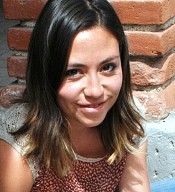
PhD received 2020. Dr. Alcantara is now an Assistant Professor of Anthropology at the University of Indiana-Bloomington.
Keitlyn entered the graduate program in Anthropology in the Fall of 2013 and completed her Ph.D. in Anthropological Bioarchaeology. Her previous studies include a B.A. in Archaeology from the University of Washington and an M.A. in Social Science (focus in Bioarchaeology) from the University of Chicago. Following the completion of her M.A. in 2011, she spent two years working with forensic anthropologist Dr. Douglas H. Ubelaker at the Smithsonian Institution National Museum of Natural History. Her fieldwork includes survey in Corsica, France, and excavation in Blue Creek, Belize and Oaxaca, Mexico. Her current dissertation research, which is supported by a Fulbright and Wenner-Gren Foundation Grant touches on themes related to the body as a site of identity creation, particularly through food practices. Focusing on a skeletal population from Tlaxcallan, a state that resisted the expanding Aztec Empire in Late Postclassic Central Mexico (AD 1325-1519), her research explores how varied interactions with imperial powers are reflected in the physical body by documenting patterns of community health, exposure to violence, diet and foodways. In 2017-2018, Keitlyn was a Public Scholar through the Curb Center for Art, Enterprise and Public Policy, working with middle school-aged Latinx immigrant communities in Nashville, fostering discussions about food as a site of memory, tradition, and identity. Keitlyn has a B.A. in Anthropology from the University of Washington and an M.A. in Social Science (with a focus in Bioarchaeology) from the University of Chicago. She is also trained in Forensic Anthropology through the George Washington University Certificate in Forensic Science, and a research assistantship in the Department of Physical Anthropology at the Smithsonian National Museum of Natural History. She is now an Assistant Professor of Anthropology at the University of Indiana-Bloomington.
༻༺
Beth Koontz Scaffidi | bethkscaffidi@gmail.com
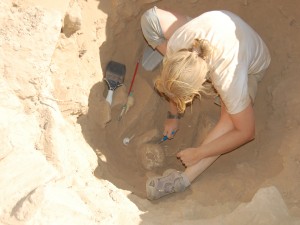
Bioarchaeology; Skeletal trauma; Violence; Warfare; Ethics in bioarchaeology; Cultural patrimony; Latin America.
Ph.D received in December 2017. NSF Post-Doctoral Fellow at Arizona State University, where she served as the PI of her own NSF project (2018-2020). Dr. Scaffidi is now an Assistant Professor of Anthropology at the University of California, Merced.
Beth graduated from UNC-Chapel Hill with degrees in Anthropology and Dramatic Art and then earned a J.D. at the University of New Hampshire School of Law. She served the State of North Carolina for two years as an Assistant District Attorney. She hopes to contribute to scholarship concerning the nature of Wari expansionism in the Majes Valley and Valley of the Volcanoes, Peru, by furthering our understanding of regional health and lifeways prior to Wari influence. More broadly, she is interested in the role of militarism in state formation and collapse, structural violence, paleopathology, skeletal trauma, state-sanctioned violence, and the cultural construction of laws and morality. During graduate studies she has contributed to archaeological excavations and bioarchaeological research in the Tierras Blancas Valley, the Middle Moche Valley, Chavin, and Ayacucho, Peru. Prior to graduate studies, she contributed to excavations in Italy, ethnographic fieldwork and research in Egypt, and ethnographic field work in the Burch Field Research Seminar (UNC-Chapel Hill) in Manteo, NC. She has volunteered for the North Carolina Office of State Archaeology, the North Carolina program for Forensic Science, the University of Pennsylvania Museum of Anthropology and Archaeology, the New England Innocence Project, and completed course work in Art and Antiquities Law with the University of San Diego School of Law in Florence, Italy.
༻༺
Matt Velasco | mcv47@cornell.edu
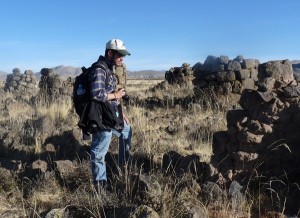
Bioarchaeology; Taphonomy; Mortuary practice; Health and diet; Late Intermediate Period; Inka; south-central Andes.
Ph.D. received in 2016. He is now an Assistant Professor of Anthropology at Cornell University.
Matt graduated Phi Beta Kappa from Stanford University in 2008 with a BA in Anthropological Sciences. His Senior Honors Thesis, entitled “Understanding Post-Chavín Mortuary Behavior: A Taphonomic Analysis of Human Remains from Chavín de Huántar, Peru,” addresses the re-use of the site’s monumental space for secondary burial following Chavín’s decline. His research interests primarily lie in community health and violence, and the relationship between social structure and mortuary practice during the Late Intermediate Period (AD 1000-1400) of Andean prehistory. As a member of Proyecto Machu Llaqta (directed by Elizabeth Arkush, University of Pittsburgh) Matt is presently investigating tomb variation and construction in the Colla region of the North Titicaca Basin and is also conducting bioarchaeological research in the Colca valley of southern, highalnd Peru. In addition to fieldwork and laboratory research at multiple sites in the north/south-central Andes, he has participated in archaeological excavation at the Paleolithic site of Chez-Pinaud (Jonzac) in southwest France. His broader anthropological interests include body modification, human evolution, the peopling of the New World, and the social construction of space/landscape.
Recipient of the 3-yr NSF-Graduate Research Fellowship.
༻༺
Danielle Kurin | dkurin@ucsb.edu
Dr. Kurin received her Ph.D. in 2012. She is an Assistant Professor at the University of California, Santa Barbara.
༻༺
Carrie Anne Berryman | carrie.a.berryman@vanderbilt.edu
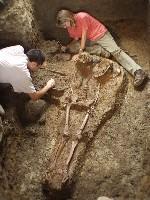
Bioarchaeology; Paleopathology; Dietary reconstruction; Nutrition; Dental health; Development of political complexity; Tiwanaku; Andes.
Ph.D. received in May 2010. Carrie Anne is now an independent business owner in the world of finance and lives in Nashville, Tennessee, so Carrie Anne, Tiffiny, and their families often hang out together in the awesome city of Nashville.
Carrie Anne graduated summa cum laude from the University of Tennessee in 1999 with a BA in anthropology and completed an MA in anthropology at the University of Arkansas in 2001. She has conducted bioarchaeological research in Greece, Jordan, Honduras, Guatemala, Bolivia, and the U.S. and served as osteologist for the Cancuen Archaeological Project in Guatemala for three years. Now ABD, Carrie Anne’s dissertation research is focused on the rise of Tiwanaku political authority in the Southern Titicaca Basin of Bolivia during the Late Formative and Middle Horizon periods. Through combining stable isotopic indicators of diet, standard dental analyses, and analysis of phytoliths from human dental calculus, her research is elucidating changing patterns of trade and dietary resource distribution that accompanied the rise of the archaic state.
 Tiffiny A. Tung